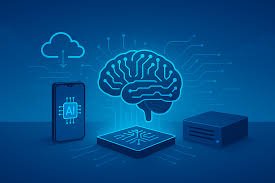
There’s a strange but fascinating idea floating around in tech right now — the concept that a machine, a factory, or even an entire system can have a kind of “virtual copy.” Not just a model, but something alive with data, constantly updating, reflecting real-world behavior in real time.
It sounds a bit futuristic, almost sci-fi. But it’s already happening. And it’s more practical than it sounds.
What Exactly Is a Digital Twin?
At its simplest, a digital twin is a virtual replica of a physical object or system. But it’s not static. It evolves alongside the real thing.
Sensors collect data from the physical asset — say, a machine on a factory floor — and feed it into the digital version. That digital model then mirrors performance, predicts issues, and helps simulate changes without touching the actual machine.
Companies like Siemens and General Electric have been investing heavily in this space, using digital twins to optimize operations in ways that weren’t possible before.
Why It Feels Like a Big Deal
For years, industries have relied on testing, maintenance schedules, and experience to keep systems running smoothly. But those methods often involve guesswork.
Digital twins reduce that uncertainty.
Instead of waiting for something to break, companies can predict failures before they happen. Instead of experimenting in the real world, they can test changes in a virtual environment first.
That shift — from reactive to proactive — is where the real value lies.
From Factories to Cities
While manufacturing is the most obvious use case, digital twins are expanding far beyond that.
Urban planners are using them to model traffic flow and infrastructure changes. Healthcare systems are exploring ways to simulate patient outcomes. Even energy sectors are creating digital twins of power grids to improve efficiency.
The conversation around Digital twins technology ka use industries me is growing because it’s no longer limited to one field. It’s becoming a cross-industry tool.
The Everyday Impact You Don’t See
Here’s the interesting part — most people interacting with products or services powered by digital twins don’t even realize it.
When a flight runs on time because maintenance was predicted accurately, or when a factory avoids downtime, or when a smart building adjusts energy usage efficiently — there’s often a digital twin working quietly in the background.
It’s not flashy. It doesn’t get headlines. But it changes outcomes.
The Challenges Behind the Scenes
Of course, building a digital twin isn’t as simple as creating a 3D model.
It requires accurate data, reliable sensors, and systems that can process large amounts of information in real time. There’s also the question of cost — setting up such infrastructure isn’t cheap.
Then there’s integration. Many industries still rely on older systems, and connecting them with modern digital platforms can be complicated.
So while the potential is huge, the path isn’t always smooth.
Who Benefits the Most?
Industries with complex systems and high operational costs tend to benefit the most.
Manufacturing plants, energy companies, transportation networks — anywhere downtime or inefficiency can lead to significant losses, digital twins offer clear value.
For smaller businesses, the adoption might be slower. But as technology becomes more accessible, that gap could narrow.
A Subtle Shift in Decision-Making
What digital twins really change is how decisions are made.
Instead of relying solely on past data or intuition, companies can simulate future scenarios. They can test “what if” situations without real-world risks.
That kind of insight doesn’t just improve efficiency — it builds confidence.
The Human Element Still Matters
Despite all this technology, one thing doesn’t change: people are still at the center.
Digital twins provide information, but humans interpret it. They decide what actions to take, what risks to accept, what direction to move in.
In a way, the technology enhances human judgment rather than replacing it.
Final Thoughts
Digital twins might not be as visible as other tech trends, but their impact is quietly growing.
They’re not about replacing the physical world — they’re about understanding it better. Reflecting it, learning from it, improving it.
And as industries continue to evolve, having that kind of mirror — one that shows not just what is, but what could be — might become less of a luxury and more of a necessity.
