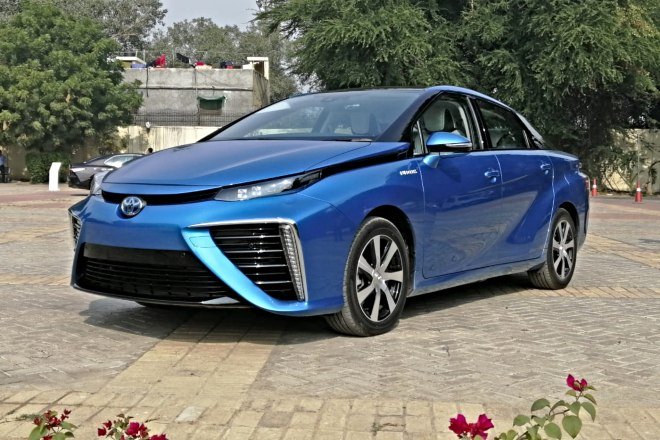
There’s something oddly fascinating about the way the auto industry reinvents itself every few years. First it was hybrids, then electric vehicles took center stage, and now—almost quietly—hydrogen fuel cars have started entering the conversation. Not loudly, not aggressively, but just enough to make you pause and wonder… is this actually the future, or just another buzzword riding the wave of innovation?
What Exactly Are Hydrogen Fuel Cars?
At a basic level, hydrogen fuel cars (also called fuel cell vehicles) generate electricity by combining hydrogen with oxygen. The only emission? Water vapor. No smoke, no carbon dioxide, no drama.
Sounds perfect, right?
Well, kind of. The idea is undeniably elegant. You refuel in minutes, just like petrol or diesel, and you get a driving range comparable to traditional cars. In theory, it’s everything EVs promise—with fewer compromises.
But as always, the devil is in the details.
The India Context: Reality vs Vision
India’s automotive ecosystem is… complicated. Infrastructure gaps, cost sensitivity, policy shifts—it’s not exactly the easiest market to introduce cutting-edge tech. While countries like Japan and South Korea have already experimented heavily with hydrogen vehicles, India is still testing the waters.
You may have heard about pilot projects or demonstration vehicles being showcased. That’s not accidental. The government has shown interest, especially under the National Hydrogen Mission, but interest doesn’t always translate into mass adoption.
This is where the debate of Hydrogen fuel cars India me future ya hype? really starts to feel relevant.
Infrastructure: The Biggest Roadblock
Let’s be honest—India doesn’t even have a fully mature EV charging network yet, and hydrogen refueling stations are far more complex and expensive to set up.
Unlike EV chargers, hydrogen infrastructure requires specialized storage, transport, and safety systems. That means massive upfront investment, and not just in metros, but across highways and tier-2 cities as well.
Without infrastructure, even the best technology struggles. And right now, that’s hydrogen’s biggest limitation.
Cost Factor: Not So Consumer-Friendly Yet
If you think EVs are expensive, hydrogen cars take things up a notch.
The production cost of fuel cells, the price of hydrogen fuel, and the lack of economies of scale all contribute to a high ownership cost. For a price-sensitive market like India, this becomes a serious barrier.
It’s not just about affordability—it’s about perceived value. Indian buyers tend to think long-term: resale value, maintenance, fuel availability. Hydrogen cars, at this stage, don’t tick all those boxes.
Environmental Impact: Not as Simple as It Seems
Here’s where things get interesting.
Hydrogen itself is clean when used in cars. But producing hydrogen—especially “grey hydrogen” derived from fossil fuels—can still generate emissions. “Green hydrogen,” made using renewable energy, is the ideal solution, but it’s currently expensive and not widely available.
So while hydrogen cars look like a zero-emission dream, the full lifecycle story is more nuanced.
EVs vs Hydrogen: A Silent Competition
Electric vehicles already have a head start in India. Charging stations are growing, government incentives are strong, and brands are actively pushing EV models across segments.
Hydrogen, on the other hand, feels like it’s still in the research-and-pilot phase.
Does that mean hydrogen will lose?
Not necessarily. It might find its niche in commercial transport—buses, trucks, long-haul logistics—where fast refueling and longer range matter more than initial cost.
So… Future or Just Hype?
If you’re expecting hydrogen cars to replace petrol vehicles in India within the next 5–10 years, that’s probably unrealistic.
But dismissing them as pure hype would be equally shortsighted.
The truth, as usual, sits somewhere in between.
Hydrogen has potential—real, tangible potential—but it’s a long game. It needs infrastructure, policy stability, cost reduction, and technological maturity. And most importantly, it needs patience.
A Thoughtful Ending
Maybe the better question isn’t whether hydrogen cars are the future or hype.
Maybe it’s this: are we willing to invest in multiple solutions at once?
Because India’s mobility challenges are too diverse for a one-size-fits-all answer. EVs might dominate urban commuting. Hydrogen could support heavy transport. Biofuels might play a role elsewhere.
The future probably won’t belong to just one technology. It rarely does.
And hydrogen? It might just be that quiet contender waiting for the right moment to prove everyone wrong—or right.
