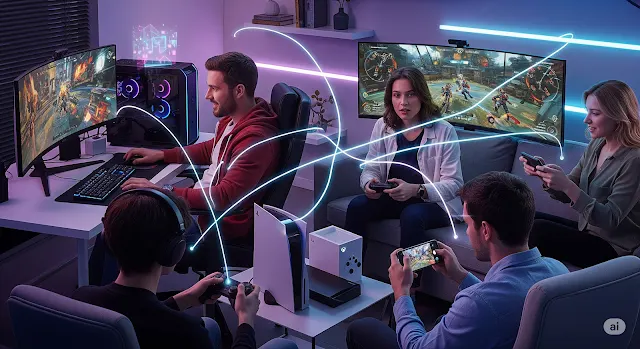
There was a time when gaming in India meant one thing — playing, not creating. People downloaded games, spent hours on them, argued over them… but the idea that someone here could build one? That felt distant, almost unrealistic.
But if you look around now, something’s changed. Quietly, steadily, without much noise, a new wave of creators has been showing up — small teams, solo developers, sometimes just a couple of friends working out of a bedroom setup. And they’re not just experimenting anymore. They’re shipping real games.
The Shift From Players to Creators
India has always had gamers. That part was never in doubt. What was missing was access — to tools, to knowledge, to communities that made game development feel possible.
That gap has been closing. Platforms like Unity and Unreal Engine have made development more accessible. You don’t need a massive studio setup anymore. A decent laptop, some patience, and a willingness to learn can take you surprisingly far.
And once a few developers started building and sharing their work, others followed. That’s usually how these things grow — slowly at first, then all at once.
Why Indie Developers Are Thriving Now
There’s something about this moment that feels right for indie creators in India.
Internet access is better. Communities are stronger. Tutorials, forums, and open resources have made learning less intimidating. Even distribution has become easier — platforms like Steam and Google Play Store allow developers to publish directly to global audiences.
But more than anything, there’s a shift in mindset. People are starting to believe that building games isn’t reserved for big studios abroad. It’s something you can try, fail at, improve, and eventually succeed in.
That belief matters more than any tool.
The Stories That Feel Different
Indie games often carry something unique — a personal touch. They’re not always polished to perfection, but they feel real.
Some Indian indie developers are exploring local stories, cultural themes, and everyday experiences in ways that big studios rarely do. It’s not just about graphics or gameplay mechanics. It’s about perspective.
And that’s where the conversation around Indie game developers ka rise India me becomes interesting. It’s not just growth in numbers — it’s growth in identity.
The Challenges No One Sees
Of course, it’s not all smooth sailing.
Building a game takes time — months, sometimes years. And during that time, there’s often little to no income. Funding is limited. Marketing is a whole different skill set. Visibility is hard to achieve when you’re competing with global titles.
There’s also the pressure of doing everything yourself. Coding, design, sound, storytelling — indie developers wear multiple hats, often without formal training.
It’s rewarding, yes. But it’s also exhausting.
Community: The Quiet Backbone
One of the most encouraging aspects of this rise is the sense of community.
Developers share resources, give feedback, collaborate on projects, and sometimes just support each other through the process. Online groups, local meetups, and game jams have become spaces where ideas take shape.
This kind of ecosystem doesn’t just help individuals — it strengthens the entire industry.
What Makes Indie Games Stand Out
Indie games don’t try to compete with big-budget titles on scale. Instead, they focus on creativity.
They experiment. They take risks. They explore ideas that might seem too niche or unconventional for mainstream studios.
Sometimes, that leads to something truly special — a game that doesn’t just entertain but leaves an impression.
And even when it doesn’t, the process itself pushes the developer forward. Each project becomes a stepping stone.
The Role of the Audience
Players have a role to play here too.
Supporting indie games — even by simply trying them out, sharing them, or leaving feedback — makes a difference. It helps developers stay motivated, improve their work, and continue building.
Because at the end of the day, games aren’t created in isolation. They’re shaped by the people who play them.
A Future That Feels Open
It’s hard to predict exactly where this movement will go. Not every indie developer will succeed. Not every game will find its audience.
But that’s not the point.
What matters is that the door is open now. More people can walk in, try their ideas, and see what happens.
Final Thoughts
The rise of indie game developers in India isn’t a sudden revolution. It’s a gradual, organic shift — driven by curiosity, persistence, and a growing sense of possibility.
It’s about people who decided to build instead of just play. Who chose to create something, even without guarantees.
And maybe that’s what makes it exciting. Not just the games themselves, but the stories behind them — the ones still being written, one line of code at a time.
