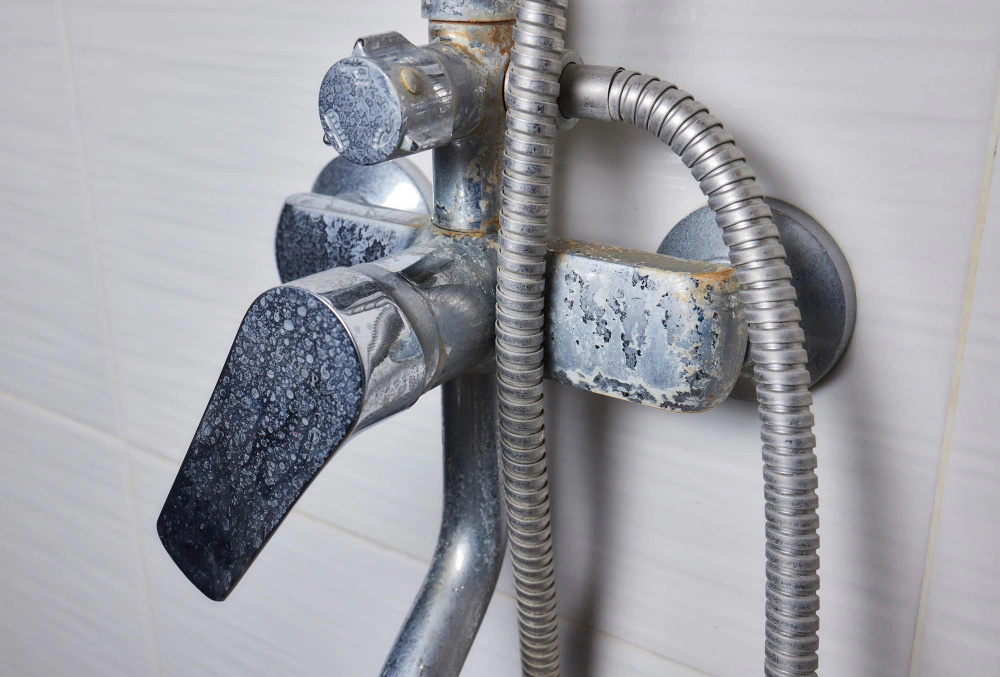
There’s a particular kind of frustration that comes with polishing a bathroom faucet, only to discover white mineral deposits returning a couple of days later. The same thing happens with shower doors, kitchen sinks, and sometimes even freshly washed drinking glasses. You begin to wonder whether your cleaning products are doing their job or if something else is responsible.
Persistent scale buildup on faucets and fixtures is often associated with hard water, a condition caused primarily by dissolved calcium and magnesium. For homeowners throughout Lancaster and Southeastern Pennsylvania, addressing excessive hardness can make household maintenance considerably more manageable.
Rather than constantly removing mineral deposits, why not investigate what’s causing them in the first place?
Understanding Where Those Stubborn White Deposits Come From
Water naturally collects minerals as it travels through underground rock formations and soil. Depending on the source, it may reach your home with varying concentrations of dissolved calcium and magnesium.
When water evaporates, these minerals can remain behind. Over time, they accumulate around faucets, showerheads, and other frequently used surfaces.
Heating water can also encourage scale formation, which explains why kettles and water heaters often develop mineral deposits.
While vinegar and suitable descaling products can help remove existing buildup, they don’t change the mineral content of your incoming water.
Whether your Lancaster property relies on a private well or municipal supply, reliable hardness testing can help determine whether additional treatment would be worthwhile.
How Water Softening Addresses the Underlying Problem
Cleaning mineral deposits repeatedly can feel like fighting a losing battle. Fortunately, there’s a more preventive approach.
Conventional softening systems for household water use an ion-exchange process to reduce dissolved calcium and magnesium before water reaches connected plumbing fixtures and appliances.
Inside the equipment, specialized resin beads exchange hardness ions for sodium or, in compatible systems, potassium ions. The resin periodically regenerates to restore its softening capacity.
Most modern equipment handles regeneration automatically according to programmed settings.
Once appropriately installed, a softener generally requires relatively little daily attention beyond occasional salt replenishment and routine maintenance.
Instead of waiting for mineral deposits to appear, homeowners can address excessive hardness directly at the incoming water supply.
Finding a Water Softener That Matches Your Lifestyle
Shopping for treatment equipment can be surprisingly confusing. Some models emphasize advanced controls, while others focus on efficiency, capacity, or convenience.
When comparing water softener options for homeowners, consider measured hardness levels, household water consumption, installation space, and ongoing operating expenses.
A busy family with multiple bathrooms may require different equipment from a couple living in a smaller home.
Demand-initiated softeners monitor water usage and regenerate according to their remaining treatment capacity and programmed settings. This can help avoid unnecessary regeneration cycles.
It’s also worth considering how easily you can access the equipment for maintenance.
A thoughtfully selected system should fit naturally into your household routine rather than become another complicated responsibility.
Why Your Water Heater Deserves Some Attention, Too
While mineral deposits around faucets are easy to spot, scale inside household equipment often goes unnoticed.
Water heaters are particularly susceptible because heating water can encourage mineral accumulation. Over time, excessive scale may interfere with heat transfer and increase maintenance requirements.
Dishwashers, washing machines, and smaller plumbing components can also experience hardness-related concerns.
Appropriate softening helps limit new scale formation, although it cannot automatically reverse existing damage.
If you’re renovating your Lancaster home or replacing older appliances, evaluating incoming water hardness is a sensible precaution.
Considering the expense of purchasing new household equipment, taking preventive measures before problems develop makes practical and financial sense.
Making Laundry and Bathroom Cleaning Less Frustrating
There’s nothing quite like wrapping yourself in a freshly washed towel after a warm shower. But when towels feel unusually stiff, water hardness might be contributing to the problem.
Calcium and magnesium can interfere with certain soaps and detergents, sometimes making cleaning less effective.
With softened water, soap may lather more readily, and homeowners may need to use different detergent quantities according to product recommendations.
Bathroom maintenance can also become more manageable when fewer new hardness-related deposits accumulate.
Of course, softer water won’t eliminate every household cleaning task. You’ll still need to wipe down surfaces and maintain your fixtures.
But reducing one recurring source of frustration can make a noticeable difference over time.
Getting Installation and Maintenance Right From the Beginning
Before purchasing a water softener, discuss your property’s plumbing layout, incoming water pressure, drainage requirements, and available installation space with a qualified professional.
Ask about salt consumption, documented equipment efficiency, replacement components, and recommended servicing intervals.
Another consideration is whether certain outlets, such as outdoor faucets, need softened water at all. An appropriately planned installation may help avoid treating water unnecessarily.
Remember that conventional softening isn’t comprehensive drinking water purification. Private well owners should continue regular laboratory testing, while additional filtration may be appropriate for unrelated water quality concerns.
Periodic hardness testing after installation can also help confirm that the equipment continues performing as intended.
Enjoying More of Your Home and Spending Less Time Cleaning
For families throughout Lancaster and Southeastern Pennsylvania, managing excessive hardness doesn’t need to mean constantly purchasing descaling products or spending weekends scrubbing bathroom fixtures.
With reliable testing, suitable equipment, and consistent maintenance, homeowners can take a more practical approach to reducing mineral-related frustrations.
Perhaps you’ll notice fewer new deposits around the kitchen sink or find yourself spending less time cleaning the shower door.
These small improvements can be surprisingly rewarding.
Homeownership already comes with plenty of responsibilities. Anything that makes familiar chores a little easier deserves consideration.
Sometimes, investing in better water isn’t about making dramatic changes to your home. It’s about reclaiming a little time, enjoying everyday comforts, and having one less thing to worry about when the weekend arrives.
