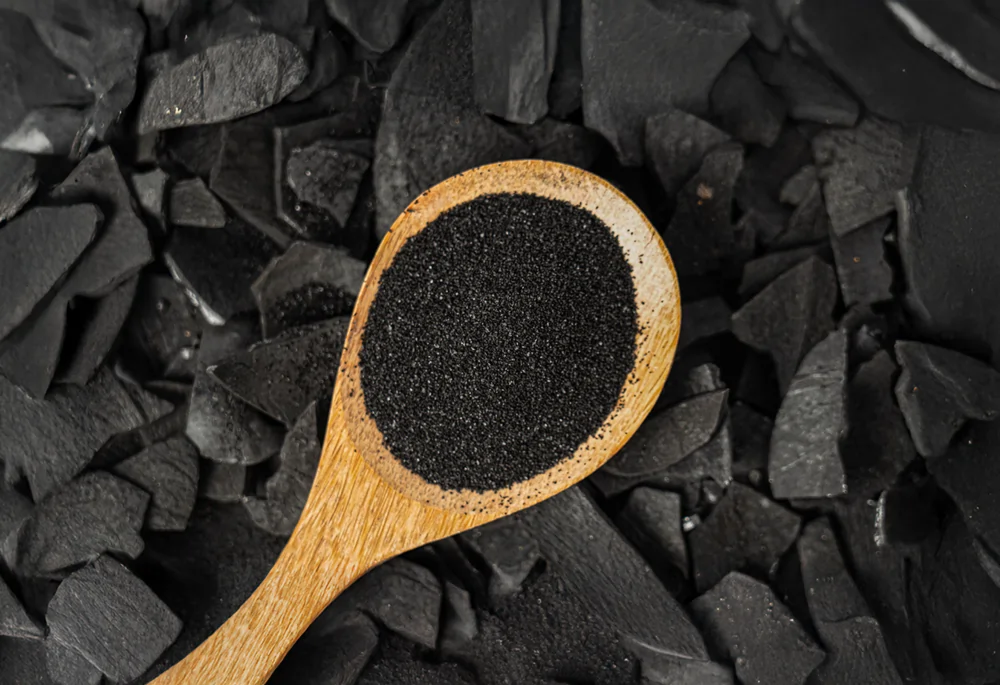
Why Activated Carbon Still Matters
Water filtration has come a long way. Modern treatment systems can use membranes, sensors, advanced media, and automated controls, yet one of the oldest filtration materials remains remarkably useful: activated carbon.
There’s a reason for that. Activated carbon has a highly porous structure that gives it a huge surface area. As water passes through the media, certain unwanted compounds can attach to its surface through a process called adsorption.
Of course, not every carbon filter performs the same way. The source material, manufacturing process, pore structure, and intended application all matter. Choosing the right carbon can make a noticeable difference in filtration performance.
What Makes Activated Carbon Different?
Activated carbon is produced by processing carbon-rich materials at high temperatures and creating a network of tiny pores. Those pores provide a large surface area where certain contaminants can be adsorbed.
Common source materials include coconut shells, wood, and coal. Each produces carbon with somewhat different characteristics.
For homeowners and businesses, the important question isn’t simply, “Is this activated carbon?” It’s “Is this particular carbon appropriate for my water?”
That distinction is easy to overlook, especially when filtration products use impressive-sounding labels.
High-Capacity Carbon for Larger Demands
Some water systems need to handle substantial volumes of water. Commercial buildings, hospitality properties, restaurants, and other facilities may require filtration media capable of supporting higher flow rates and longer operating periods.
high capacity coconut shell activated carbon is one option used in applications where coconut-shell carbon’s adsorption characteristics are desirable.
Coconut-shell carbon is often associated with a relatively high proportion of micropores, which can make it useful for reducing certain smaller organic compounds. The actual performance depends on the carbon’s specifications and the substances being targeted.
That’s why capacity should never be judged by the product name alone. Flow rate, contact time, contaminant concentration, bed depth, and water chemistry all influence results.
The Unique Role of Bone Char Carbon
Not all carbon filtration materials are designed for exactly the same purpose.
bone char carbon is a specialized media produced by heating animal bones under controlled conditions. It contains carbon along with mineral components, particularly calcium phosphate.
One of its best-known applications is the reduction of fluoride from water. The mineral component of bone char contributes significantly to this capability, making it different from ordinary activated carbon used mainly for taste, odor, and organic-compound reduction.
Because its properties are specialized, bone char should be selected according to the actual water-quality requirement. Testing is especially useful when fluoride reduction is a primary goal.
When Catalytic Carbon Makes Sense
Some water-treatment problems require more than conventional adsorption.
catalytic carbon is modified to provide enhanced catalytic activity and can be particularly useful for certain chlorine-related compounds, including chloramine, depending on the specific media and system design.
Chloramine is increasingly used as a drinking-water disinfectant in some water supplies. It tends to be more persistent than free chlorine, which can make it more challenging for standard carbon media to reduce effectively.
Catalytic carbon can offer a useful solution in appropriate applications. Still, performance depends on contact time, water chemistry, media quality, and system sizing.
In other words, the media matters—but so does everything around it.
Why Contact Time Is Important
A common mistake in filtration is focusing only on the type of media while ignoring how long water actually remains in contact with it.
Activated carbon needs adequate contact time to adsorb targeted substances effectively. If water rushes through the media too quickly, treatment performance may suffer.
This is particularly important in larger systems where water demand can change throughout the day.
A properly designed filter considers flow rate, carbon volume, bed depth, and empty bed contact time. These technical details might sound a little dry, but they have a very practical purpose: making sure the carbon has enough opportunity to do its job.
Water Testing Should Guide the Decision
Choosing carbon based on a general assumption isn’t ideal.
Water testing can help identify characteristics such as chlorine, chloramine, fluoride, organic compounds, sediment, hardness, and other parameters depending on the type of analysis performed.
Once the water is understood, the filtration media can be selected more intelligently.
For example, a household primarily concerned about chlorine taste may need a different carbon solution from a facility dealing with chloramine. Likewise, a fluoride concern may require a specialized medium rather than ordinary activated carbon.
The right filter starts with the right question.
Carbon Filtration Has Its Limits
Activated carbon is useful, but it isn’t a universal solution.
Carbon may reduce many organic compounds, chlorine, certain odors, and unpleasant tastes. However, it isn’t designed to remove every contaminant from every water supply.
Hardness minerals, salts, many dissolved inorganic substances, and certain microorganisms may require different treatment technologies.
That’s why complete water-treatment systems sometimes combine carbon with sediment filtration, softening, reverse osmosis, ultraviolet treatment, or other technologies.
Good filtration isn’t about making one material do everything. It’s about giving each technology a job it can perform well.
Maintenance Keeps Carbon Working
Activated carbon doesn’t last forever.
As adsorption sites become occupied, the media gradually loses its ability to reduce targeted substances. How quickly that happens depends on water quality, contaminant levels, flow, usage, and the amount of carbon installed.
Filters should therefore be replaced according to the manufacturer’s recommendations or an appropriate monitoring schedule.
Waiting until the water tastes strange isn’t always the best approach. Some contaminants don’t have an obvious taste or odor, so performance shouldn’t be judged by your senses alone.
Regular maintenance is a small responsibility that protects the larger investment.
Choosing Carbon for Your Home or Business
When comparing carbon filtration systems, look beyond the marketing language.
Ask what type of carbon is being used, what it is certified or tested to reduce, how much media the system contains, what flow rate it supports, and how frequently it needs replacement.
For commercial applications, also consider pressure drop, peak flow demand, maintenance access, and the cost of replacement media.
A professional water-treatment assessment can be especially helpful when the application is complicated or the water contains several different concerns.
A Better Way to Think About Carbon Filtration
Activated carbon may not be the newest technology in water treatment, but it remains useful because it solves real problems when properly selected and applied.
Coconut-shell carbon, bone char, and catalytic carbon each have different characteristics and potential applications. None should be treated as a universal answer.
The smartest approach is straightforward: understand the water, identify the contaminants that actually matter, select suitable media, size the system correctly, and maintain it consistently.
When those pieces come together, carbon filtration can quietly do its job day after day.
And that’s really the beauty of good water treatment. You don’t need to think about the microscopic pores inside the filter every time you turn on the faucet. You simply get water that tastes better, performs better, and fits the needs of your home or facility.
